Cusco
Navel of the World
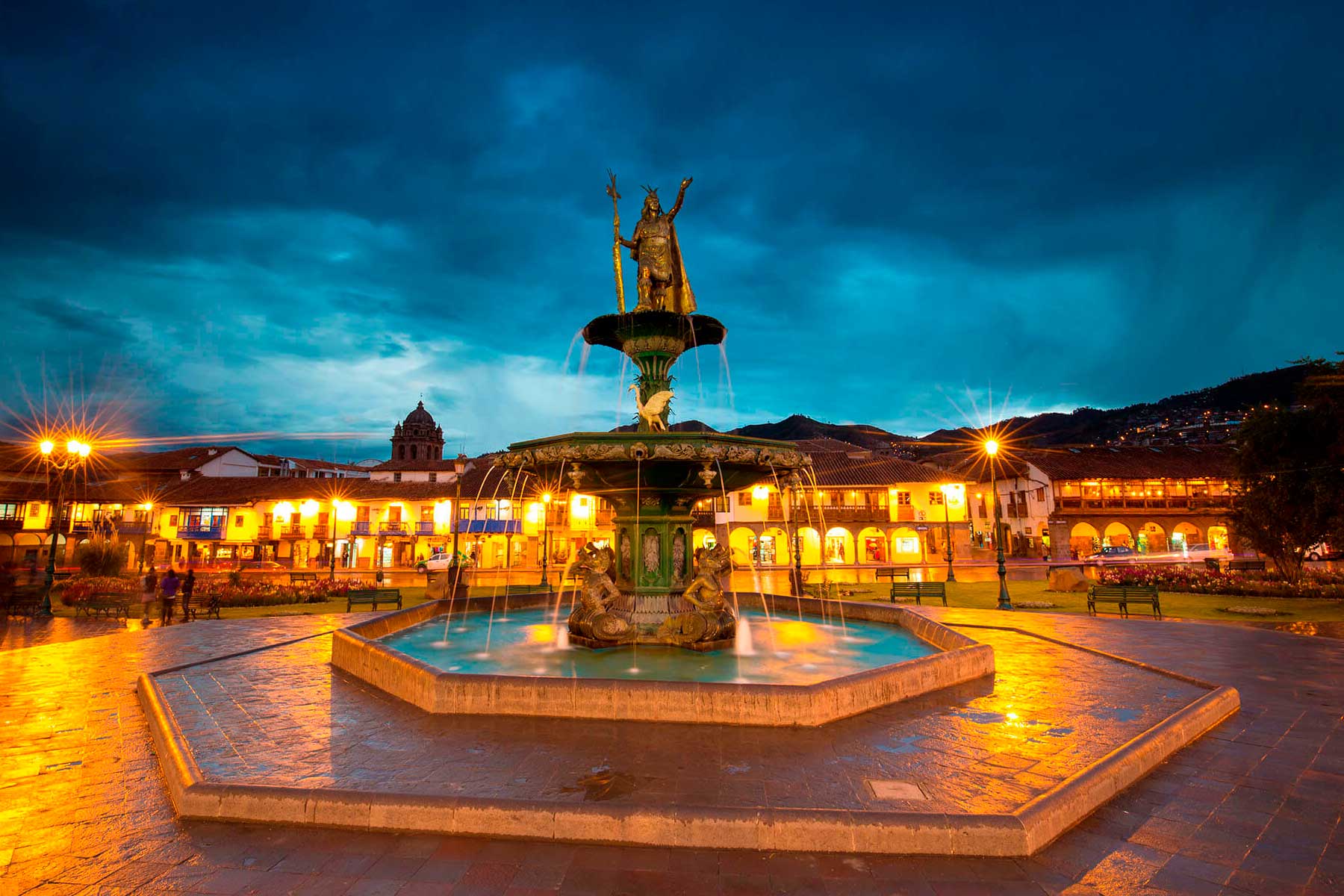
Cusco is a city located in the heart of the Peruvian Andes. Before the arrival of the Spanish conquistadors, it was the nerve center of the Inca Empire, one of the most advanced civilizations in the Americas. Its name, which means “Navel of the World” in Quechua, reflects the Inca vision of Cusco as the center of the known world. Today, it is a fascinating destination for travelers, known for its rich history, unique architecture, and as the starting point to Machu Picchu.
History:
- Inca origins: According to Inca legends, the first Inca, Manco Capac, founded Cusco in the 12th century. The city developed as an urban complex with sacred temples, palaces and plazas, symbolizing the power and sophistication of the Inca civilization.
- Spanish Conquest: In 1533, Francisco Pizarro and his men arrived in Cusco, sacking the city and ushering in the colonial era. Cusco’s architecture today reflects this turbulent history, with many churches and colonial buildings built directly on Inca foundations.
Festivals and Events:
- The Inti Raymi is an ancestral Inca ceremony that takes place on June 24 in honor of the sun god, Inti. It is one of the most important and representative festivities of Cusco, where a traditional Inca ceremony is recreated in the esplanade of Sacsayhuaman, showing the Inca history and spirituality.
- The Cusco Carnivals is a vibrant celebration that takes place in February, full of music, folkloric dances and colorful parades that reflect the joy and cultural diversity of the region. It is a time to share in community and enjoy the Cusquenian tradition.
- The Religious Festivity in Honor of the Lord of the Earthquakes of Cuzco is celebrated in March and is a profound display of religious devotion. It includes solemn processions, religious ceremonies and cultural activities that highlight local faith and traditions.
- The Corpus Christi is an outstanding festivity in Cusco, where multitudinous processions are held with carpets of flowers and elaborate tapestries in the streets. It is an opportunity to show the religious devotion and cultural pride of the community.
- The Fest and Pilgrimage of the Lord of Qoyllur Rit’i takes place in May or June at the Sanctuary of the Lord of Qoyllur Rit’i, combining Andean religious traditions with Catholic elements. It attracts thousands of pilgrims and visitors from all over the world in an atmosphere of celebration and spirituality.
Tourist Attractions:
Gastronomy:
Cusco’s gastronomy is a fusion of Andean and Spanish traditions that has given rise to delicious and varied dishes. Here are some of the most representative dishes of Cusco’s gastronomy:
Cuy al Horno: Guinea pig, a typical animal of the Andean region, is prepared in the oven and seasoned with aromatic herbs. It is a dish traditionally consumed on special occasions and festivities.
Pachamanca: It is an ancestral dish of Andean cuisine in which meat (such as pork, lamb, chicken), potatoes, sweet potatoes, corn and aromatic herbs are cooked underground, using hot stones. It is a ritual meal that is shared in community.
Chiriuchu: A typical Corpus Christi dish, which includes ingredients such as dried meat, jerky, chorizo, cheese, potatoes, rocoto, quail eggs and roasted corn. It is a mixture of flavors and textures that represents the diversity of Cusco’s gastronomy.
Papas a la Huancaína: Although originally from the Huancayo region, it is very popular in Cusco. It consists of boiled potatoes served with a creamy aji amarillo sauce, fresh cheese, milk and crackers, accompanied by hard-boiled egg and olives.
Chicha de Jora: A fermented corn-based drink, widely consumed in the Andean region. It is refreshing and usually accompanies traditional meals.
Rocoto Relleno: The rocoto is a type of very hot chili bell pepper that is stuffed with a mixture of meats, onion, cheese and spices, then baked until golden brown and served as a main dish.
Cusquenian Ceviche: Although Cusco is not near the sea, its ceviche has a unique touch. It is prepared with fresh fish, lemon, yellow chili, red onion, roasted corn and sweet potato. It is a delicious alternative to the coastal version of ceviche.
Gallery of Cusco: